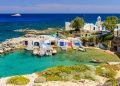

When most people dream of the Greek islands, names like Mykonos or Santorini usually steal the spotlight. But those in the know head to Tinos—a Cycladic island that blends spiritual depth, artistic heritage, wild landscapes, and deep-rooted tradition.
Easily reached by ferry from Athens (Rafina or Piraeus), Tinos is a standalone destination for those seeking authenticity, substance, and natural beauty. Whether you’re a pilgrim, a hiker, a food lover, or a traveler in search of unpolished charm, Tinos offers a different kind of Greek island experience.


Pilgrimage Island of the Aegean
Tinos is one of the most important religious destinations in Greece, home to the Church of Panagia Evangelistria—a site of deep Orthodox reverence.
-
The church houses a miraculous icon of the Virgin Mary, believed to have healing powers.
-
Every year on August 15, thousands of pilgrims arrive to honor the Virgin Mary during the Feast of the Assumption.
-
Some devotees climb the path to the church on their knees in an act of faith.
💡 Even for non-religious visitors, the atmosphere is powerful—peaceful, spiritual, and deeply moving.

The Island of Marble
Tinos is famous for its marble artistry, visible not only in museums but in everyday life: door frames, fountains, church facades, and even bus stops are adorned with intricate carvings.
Must-Visit Villages:
-
Pyrgos: Greece’s most important marble village, with a sculpture museum, marble school, and beautiful central square.
-
Isternia: Built amphitheatrically on a hillside, offering sea views and marble-lined streets.
-
Volax: Surreal landscape of round boulders, traditional basket-weaving, and a unique creative vibe.
💡 Don’t leave without visiting the Museum of Marble Arts and seeing local sculptors at work.

Windswept & Wild: Nature’s Signature on Tinos
Tinos is often called “The Island of the Winds”, thanks to the meltemi, a strong Aegean wind that shapes both landscape and lifestyle.
-
The island is popular for windsurfing and water sports, especially at Kolymbithra Beach.
-
The wind has also influenced traditional architecture: stone pigeon towers and windmills are dotted across the hills.
ADVERTISEMENT -
Even in summer, the breeze brings cool air and dramatic energy to the island’s rugged beauty.
💡 A light jacket or windbreaker is a smart addition to your packing list—even in July and August.
Food That Tastes Like the Land
Tinos offers one of the most authentic culinary experiences in the Cyclades. Expect dishes that are simple, local, and full of character.
-
Louza – Cured pork with spices, sliced thin like prosciutto
-
Tinian artichokes – Featured in pies, stews, and meze
-
Local cheeses – Like “kariki” (aged inside a gourd), “malathouni,” and “volaki”
-
Fresh herbs, honey, and olive oil from family farms
Pair your meal with Tinian wine or tsipouro and enjoy it slowly, as the locals do.

Trails, Chapels & Hidden Beaches
Tinos is one of the best Greek islands for hiking. Ancient stone-paved footpaths, once used by donkeys and villagers, now serve as scenic walking routes.
-
Hike from village to village through terraced hills, vineyards, and olive groves
-
Discover over 1,000 tiny chapels scattered across the island, each with a story
-
Swim at secluded beaches like Lichnaftia, Agios Romanos, Livada, or Santa Margarita
💡 Most beaches are untouched, with no sunbeds or music—just nature and silence.
Final Word: Come for the Wind, Stay for the Soul
Tinos isn’t flashy. It doesn’t try to impress you—it just invites you in, offering stillness, depth, and authenticity.
From spiritual pilgrimages and marble sculptures to mountain hikes and meals that taste like memory, Tinos is a place to breathe deeply, walk slowly, and experience Greece with all five senses.
If you’re looking for an island that feels real, rooted, and quietly powerful, Tinos belongs on your itinerary.